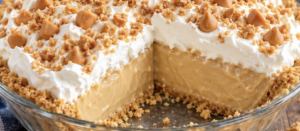
Old-Fashioned Butterscotch Pie 🥧
This Butterscotch Pie is a classic old-fashioned dessert with a buttery, caramel-like brown sugar filling tucked inside a flaky pie crust. The filling cooks into a silky homemade custard with deep butterscotch flavor, then the chilled pie can be finished with fluffy whipped cream or a traditional meringue.
It’s the kind of nostalgic dessert that fits perfectly on a Sunday dinner, Thanksgiving table, Christmas dessert spread, or family gathering.
Prep Time: 20 minutes
Cook Time: 30 minutes
Chill Time: 4 hours
Total Time: About 5 hours
Servings: 8
Why You’ll Love This Recipe
- Rich brown sugar and butter flavor
- Homemade custard filling
- Creamy but sliceable texture
- Uses simple pantry ingredients
- Can be made ahead
- Delicious with whipped cream or meringue
- Perfect old-fashioned comfort dessert
Ingredients
Pie Crust
- 1 unbaked 9-inch pie crust
Butterscotch Filling
- 1 cup packed dark brown sugar
- ¼ cup cornstarch
- ¼ teaspoon salt
- 2 cups whole milk
- ½ cup heavy cream
- 4 large egg yolks
- 4 tablespoons unsalted butter
- 2 teaspoons vanilla extract
Whipped Cream Topping
- 1 cup cold heavy whipping cream
- 2 tablespoons powdered sugar
- ½ teaspoon vanilla extract
Optional garnish:
- Butterscotch chips
- Caramel drizzle
- Chocolate curls
- Toasted pecans
How to Make Butterscotch Pie
Step 1: Blind-Bake the Pie Crust
Preheat the oven to 375°F (190°C).
Fit the pie dough into a 9-inch pie plate and crimp the edges.
Line the crust with parchment paper and fill it with pie weights or dried beans.
Bake for approximately 15 minutes.
Carefully remove the parchment and weights and continue baking for another 8–12 minutes, or until the crust is golden and fully baked.
Allow it to cool completely.
Because the butterscotch filling is cooked separately, the crust needs to be fully baked before filling.
Step 2: Combine the Dry Ingredients
In a medium saucepan, whisk together:
- Brown sugar
- Cornstarch
- Salt
Breaking up any brown sugar lumps now will help produce a smoother custard.
Step 3: Add the Milk and Cream
Gradually whisk in the whole milk and heavy cream.
Place the saucepan over medium heat.
Cook while whisking frequently until the mixture becomes hot and begins to thicken.
Don’t walk away from the saucepan—the bottom can scorch if it isn’t stirred.
Step 4: Temper the Egg Yolks
Whisk the egg yolks in a separate bowl.
Slowly pour approximately ½ cup of the hot milk mixture into the yolks while whisking constantly.
Add another small amount of the hot mixture and continue whisking.
This gradually warms the eggs so they don’t scramble.
Step 5: Finish the Custard
Slowly whisk the tempered egg mixture back into the saucepan.
Continue cooking over medium-low heat, whisking constantly, until the custard becomes thick and begins to bubble.
Once bubbling, cook for about 1 additional minute while stirring.
The filling should be thick enough to coat the back of a spoon.
Step 6: Add Butter and Vanilla
Remove the saucepan from the heat.
Immediately stir in:
- Butter
- Vanilla extract
Continue stirring until the butter melts completely.
The filling should now be smooth, glossy, and richly scented with brown sugar and vanilla.
Step 7: Fill the Pie
Pour the warm butterscotch custard into the cooled pie crust.
Smooth the top with a spatula.
Press plastic wrap directly against the surface of the filling if you don’t want a skin to form.
Step 8: Chill
Refrigerate for at least 4 hours, preferably longer.
The filling needs sufficient time to become completely cold and firm enough for clean slices.
Step 9: Make the Whipped Cream
Shortly before serving, beat the cold heavy cream until it begins to thicken.
Add powdered sugar and vanilla.
Continue beating until medium peaks form.
Don’t overbeat.
Step 10: Decorate and Serve
Spread or pipe the whipped cream over the chilled pie.
For an extra-special finish, add a light caramel drizzle or a few toasted pecans.
Slice and serve cold.
What Gives Butterscotch Its Flavor?
Butterscotch is traditionally associated with the combination of brown sugar and butter.
Brown sugar contains molasses, giving the filling a deeper caramel-like flavor than ordinary granulated sugar.
Butter adds richness and rounds out that molasses flavor.
Vanilla and a small amount of salt make the butterscotch flavor even more pronounced.
Light Brown Sugar vs. Dark Brown Sugar
Either works.
Dark brown sugar provides a stronger molasses flavor and creates a deeper-colored filling.
Light brown sugar produces a milder, sweeter butterscotch flavor.
For an old-fashioned pie with a pronounced butterscotch character, dark brown sugar is an excellent choice.
The Secret to Smooth Butterscotch Custard
Three things matter most: constant stirring, proper egg tempering, and enough cooking time.
Add the hot liquid gradually to the egg yolks instead of pouring everything together.
Once the eggs are incorporated, cook the custard until properly thickened.
If you remove it from the heat too early, the finished pie may not set firmly enough to slice.
How Thick Should the Filling Be?
Before pouring it into the crust, the filling should resemble a thick pudding.
When you run a spatula across the bottom of the saucepan, the mixture should briefly leave a visible trail.
Remember that it will become considerably firmer after several hours in the refrigerator.
Old-Fashioned Butterscotch Meringue Pie
For an even more traditional presentation, replace the whipped cream with meringue.
Use the egg whites left from making the custard.
You’ll need approximately:
- 4 egg whites
- ½ teaspoon cream of tartar
- ½ cup granulated sugar
- ½ teaspoon vanilla
Beat the egg whites and cream of tartar until foamy.
Gradually add the sugar while beating until glossy stiff peaks form.
Spread the meringue over the hot filling, making sure it touches the crust around the entire edge.
Bake at 350°F (175°C) until the meringue is attractively golden.
Cool and then refrigerate.
Butterscotch Cream Pie
For an especially creamy version, prepare the pie as written and top it generously with whipped cream.
Finish with:
Caramel drizzle + toasted pecans + a tiny pinch of flaky salt.
The slightly salty finish balances the sweet brown sugar filling beautifully.
Butterscotch Pie with Graham Cracker Crust
You don’t have to use pastry crust.
Combine:
- 1½ cups graham cracker crumbs
- ¼ cup granulated sugar
- 6 tablespoons melted butter
Press into a 9-inch pie plate.
Bake at 350°F (175°C) for approximately 8–10 minutes.
Cool completely before adding the butterscotch filling.
Butterscotch Pie with Vanilla Wafer Crust
Vanilla wafers also pair beautifully with butterscotch.
Combine crushed vanilla wafers with melted butter and a small amount of sugar.
Press into the pie plate, bake briefly, and cool before filling.
The vanilla-cookie flavor makes this variation especially nostalgic.
Salted Butterscotch Pie
Add a little flaky sea salt over the whipped cream immediately before serving.
Don’t overdo it.
A small amount of salt contrasts with the rich brown sugar custard and makes the butterscotch flavor taste more intense.
Butterscotch Pecan Pie
Toast approximately ½ cup chopped pecans.
Sprinkle some over the crust before adding the filling.
Use the remaining pecans to decorate the whipped cream.
This adds crunch to an otherwise very smooth dessert.
Chocolate Butterscotch Pie 🍫
Chocolate and butterscotch work surprisingly well together.
Add chocolate curls or mini chocolate chips over the whipped cream.
For a more dramatic dessert, spread a thin layer of melted chocolate over the cooled crust and allow it to set before adding the butterscotch filling.
Why Didn’t My Butterscotch Pie Set?
The most likely reason is that the custard wasn’t cooked long enough.
Cornstarch needs sufficient heat to properly thicken the filling.
Another possibility is cutting the pie before it has completely chilled.
Give it at least 4 hours in the refrigerator. Overnight chilling is even better when you want very neat slices.
Why Is My Filling Lumpy?
Lumps can result from:
- Adding hot liquid to eggs too quickly
- Not whisking continuously
- Cooking over excessively high heat
- Allowing custard to scorch on the bottom
If you notice small lumps, immediately pass the hot custard through a fine-mesh strainer before adding the butter and vanilla.
Why Is My Pie Crust Soggy?
The crust must be completely baked before the custard goes in.
For additional protection, brush the hot baked crust lightly with beaten egg white and return it to the oven briefly.
Once cooled, this creates a thin barrier between the crust and creamy filling.
Can I Make Butterscotch Pie Ahead?
Yes. In fact, it’s an excellent make-ahead dessert.
Prepare the crust and filling the day before serving.
Cover and refrigerate overnight.
Add whipped cream and decorative toppings shortly before serving.
This gives the filling plenty of time to set.
How to Get Clean Pie Slices
Make sure the pie is thoroughly chilled.
Use a sharp knife and wipe the blade clean between every slice.
For especially neat presentation, refrigerate overnight before cutting.
Storage
Keep Butterscotch Pie refrigerated.
Cover the pie carefully and enjoy it within approximately 3–4 days.
If you’re using whipped cream, keep the pie cold until shortly before serving.
Can You Freeze Butterscotch Pie?
Custard pies aren’t the best candidates for freezing because the filling can become watery or grainy after thawing.
For the smoothest texture, make this pie fresh and store it refrigerated.
Frequently Asked Questions
What is Butterscotch Pie?
It’s a custard-style pie flavored primarily with brown sugar and butter, usually served with whipped cream or meringue.
Does butterscotch contain chocolate?
No. Traditional butterscotch flavor comes primarily from brown sugar and butter.
Can I use light brown sugar?
Yes. The flavor will simply be a little milder.
Is dark brown sugar better?
Dark brown sugar provides a deeper molasses flavor, making it particularly good for a rich old-fashioned version.
Can I use a store-bought crust?
Absolutely. Fully bake the crust according to its instructions before adding the cooked filling.
Can I use a graham cracker crust?
Yes. Graham crackers pair very well with butterscotch.
Can I use vanilla wafers?
Yes. A vanilla wafer crust is another delicious option.
Why do I need to temper the eggs?
Tempering gradually raises the temperature of the yolks and helps prevent scrambled pieces of egg in the custard.
Can I use whipped cream instead of meringue?
Yes. Whipped cream is easy and works beautifully.
Can I make a meringue topping?
Definitely. It’s one of the most traditional ways to finish an old-fashioned butterscotch pie.
Why didn’t my pie set?
The custard may not have cooked long enough or the pie may need additional chilling time.
Can I make it the day before?
Yes. Butterscotch Pie is particularly convenient as an overnight make-ahead dessert.
How long should it chill?
At least 4 hours. Overnight is ideal for firm, clean slices.
How long does it keep?
Properly refrigerated, it is best enjoyed within about 3–4 days.
Pro Tips
Use dark brown sugar for deep butterscotch flavor, and cook the custard over moderate heat while whisking frequently. Temper the egg yolks gradually, and don’t remove the filling from the stove until it is noticeably thick.
Fully bake and cool the crust before filling it, then give the finished pie plenty of refrigerator time. For the most nostalgic presentation, top it with golden meringue; for the easiest version, use freshly whipped cream with a little caramel drizzle and toasted pecans.
Final Thoughts
This Old-Fashioned Butterscotch Pie is all about simple ingredients creating a deeply comforting dessert. Brown sugar, butter, vanilla, milk, and egg yolks come together to make a smooth custard with a rich caramel-like butterscotch flavor.
Serve it with fluffy whipped cream, traditional meringue, toasted pecans, or a light caramel drizzle. Whether it’s made for Thanksgiving, Christmas, Sunday dinner, or simply because you’re craving an old-fashioned homemade pie, it’s a timeless dessert worth bringing back to the table.