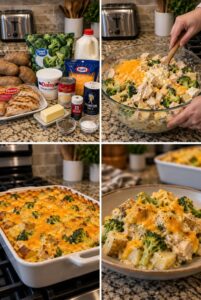
Cheesy Baked Potato Chicken and Broccoli Casserole
This Cheesy Baked Potato Chicken and Broccoli Casserole combines tender potatoes, juicy chicken, fresh broccoli, and a rich homemade cheddar sauce in one comforting meal. Everything is baked until hot and bubbly, then finished with extra melted cheese and optional crispy bacon.
It’s perfect for busy weeknights, family dinners, potlucks, meal preparation, or using leftover chicken and baked potatoes.
Prep Time: 25 minutes
Bake Time: 30–35 minutes
Total Time: Approximately 1 hour
Servings: 8
Why You’ll Love This Recipe
- Creamy, cheesy homemade sauce
- Tender chicken and potatoes
- Includes nutritious broccoli
- Uses simple ingredients
- Family-friendly
- Easy to prepare ahead
- Excellent use for leftovers
- Customizable with different cheeses
- Makes a complete meal
- Perfect for feeding a crowd
Ingredients
Chicken, Potatoes, and Broccoli
- 2 pounds russet or Yukon Gold potatoes
- 3 cups cooked chicken, diced or shredded
- 3 cups broccoli florets
- 1 tablespoon olive oil
- ½ teaspoon salt
- ¼ teaspoon black pepper
- ½ teaspoon garlic powder
- ½ teaspoon onion powder
Cheddar Cheese Sauce
- 4 tablespoons unsalted butter
- ¼ cup all-purpose flour
- 2 cups milk
- 1 cup low-sodium chicken broth
- ½ cup sour cream
- 1 teaspoon Dijon mustard
- ½ teaspoon garlic powder
- ½ teaspoon onion powder
- ¼ teaspoon smoked paprika
- ½ teaspoon salt, or to taste
- ¼ teaspoon black pepper
- 2½ cups shredded sharp cheddar cheese, divided
Optional Toppings
- 6 slices cooked and crumbled bacon
- Sliced green onions
- Chopped fresh parsley
- Extra sour cream
- Crushed buttery crackers
- Crispy fried onions
- Grated Parmesan cheese
- Red pepper flakes
How to Make Cheesy Baked Potato Chicken and Broccoli Casserole
Step 1: Preheat the Oven
Preheat your oven to 375°F.
Lightly coat a 9×13-inch baking dish with nonstick cooking spray.
Place the baking dish on a sheet pan if you’re concerned about the cheese sauce bubbling over.
Step 2: Prepare the Potatoes
Scrub the potatoes thoroughly and cut them into approximately ¾-inch cubes.
You can peel them or leave the skins on for additional texture.
Try to make the pieces similar in size so they cook evenly.
Step 3: Parboil the Potatoes
Place the cubed potatoes in a large pot and cover them with cold water.
Add a small pinch of salt and bring the water to a boil.
Reduce the heat and simmer for approximately 7–9 minutes, or until the potatoes are beginning to soften but are not completely cooked.
Step 4: Drain the Potatoes
Drain the potatoes thoroughly.
Allow them to sit in the colander for a few minutes so excess steam and moisture can escape.
The potatoes should remain firm enough to hold their shape during baking.
Step 5: Prepare the Broccoli
Cut the broccoli into small, bite-sized florets.
For softer broccoli, blanch it in boiling water for approximately two minutes and drain well.
If you prefer firmer broccoli, it can be added to the casserole without blanching.
Step 6: Season the Chicken and Vegetables
Place the potatoes, chicken, and broccoli in a large mixing bowl.
Add the olive oil, salt, black pepper, garlic powder, and onion powder.
Toss gently until the ingredients are evenly seasoned.
Step 7: Melt the Butter
Place a large saucepan over medium heat.
Add the butter and allow it to melt without browning.
Step 8: Make the Roux
Sprinkle the flour over the melted butter.
Whisk continuously for approximately 1–2 minutes.
This cooks away the raw flour flavor and creates the base for the creamy sauce.
Step 9: Add the Milk and Broth
Gradually pour in the milk while whisking constantly.
Add the chicken broth and continue whisking until the sauce is smooth.
Adding the liquid slowly helps prevent lumps.
Step 10: Thicken the Sauce
Cook the sauce over medium heat for approximately 4–6 minutes, stirring frequently.
The sauce is ready when it lightly coats the back of a spoon.
Don’t allow it to boil vigorously because dairy-based sauces can separate.
Step 11: Season the Sauce
Reduce the heat to low.
Add the Dijon mustard, garlic powder, onion powder, smoked paprika, salt, and black pepper.
Taste the sauce before adding extra salt, especially if your chicken and broth are already seasoned.
Step 12: Add the Sour Cream
Remove the saucepan from the heat.
Whisk in the sour cream until completely smooth.
Adding it away from direct heat reduces the risk of curdling.
Step 13: Add the Cheese
Reserve one cup of shredded cheddar for the top of the casserole.
Gradually stir the remaining cheese into the warm sauce until melted and smooth.
For the best texture, add the cheese in small handfuls rather than all at once.
Step 14: Combine the Casserole
Pour the cheese sauce over the chicken, potatoes, and broccoli.
Fold the ingredients together gently until everything is evenly coated.
Avoid stirring too aggressively because the partially cooked potatoes can break apart.
Step 15: Fill the Baking Dish
Transfer the mixture to the prepared baking dish.
Spread it into an even layer, making sure the chicken and broccoli are distributed throughout the potatoes.
Step 16: Add the Topping
Sprinkle the reserved cup of cheddar cheese evenly over the casserole.
Add crumbled bacon, crushed crackers, Parmesan, or crispy onions if desired.
If using cracker crumbs, toss them with one tablespoon of melted butter before sprinkling them over the cheese.
Step 17: Bake
Cover the baking dish loosely with aluminum foil.
Bake for approximately 20 minutes.
Remove the foil and continue baking for another 10–15 minutes, or until the casserole is bubbling and the potatoes are completely tender.
Step 18: Brown the Cheese
For a more golden topping, place the casserole under the broiler for approximately 1–2 minutes.
Watch it continuously because cheese and cracker crumbs can burn quickly.
Step 19: Rest
Remove the casserole from the oven and let it rest for approximately 10 minutes.
Resting allows the cheese sauce to thicken slightly and makes the casserole easier to serve.
Step 20: Garnish and Serve
Finish with green onions, parsley, bacon, or a spoonful of sour cream.
Serve while warm, making sure each portion includes chicken, broccoli, potatoes, and plenty of cheese sauce.
The Best Potatoes for This Casserole
Russet potatoes become soft and fluffy while absorbing the creamy sauce.
Yukon Gold potatoes have a naturally buttery flavor and maintain their shape especially well.
Other suitable options include:
- Red potatoes
- Baby potatoes
- Fingerling potatoes
- Leftover baked potatoes
- Frozen diced potatoes
Avoid cutting the potatoes into large pieces because they may not become tender before the casserole finishes baking.
Can I Use Leftover Baked Potatoes?
Yes. Leftover baked potatoes make this recipe especially convenient.
Cut the cooked potatoes into cubes and add them directly to the chicken and broccoli. There is no need to boil them again.
Fold them gently into the sauce so they don’t break apart.
The Best Chicken to Use
Any cooked, boneless chicken can be used.
Good options include:
- Rotisserie chicken
- Baked chicken breasts
- Grilled chicken
- Roasted chicken thighs
- Poached chicken
- Leftover turkey
- Canned chicken, well drained
Rotisserie chicken is particularly convenient, but taste the sauce before adding salt because it may already be heavily seasoned.
Can I Use Raw Chicken?
Cooked chicken is recommended because it ensures the meat reaches a safe temperature without overbaking the potatoes and broccoli.
If using raw chicken, cut it into small pieces and sauté it in a skillet until fully cooked before assembling the casserole.
Fresh or Frozen Broccoli
Fresh broccoli provides the best color and slightly firm texture.
Frozen broccoli also works, but thaw and drain it thoroughly first. Excess water can thin the cheese sauce and make the casserole watery.
Pat thawed broccoli dry with paper towels before adding it to the mixture.
How to Keep the Casserole from Becoming Watery
Excess moisture usually comes from frozen broccoli, improperly drained potatoes, or thin cheese sauce.
For a thick, creamy casserole:
- Drain the potatoes thoroughly
- Thaw and dry frozen broccoli
- Cook the sauce until it coats a spoon
- Use full-fat sour cream
- Don’t add extra broth unless necessary
- Let the casserole rest before serving
How to Keep the Cheese Sauce Smooth
Shred the cheddar from a block whenever possible. Packaged shredded cheese often contains anti-caking ingredients that can make sauces slightly grainy.
Remove the sauce from direct heat before adding the cheese.
Stir it in gradually and stop heating once it has melted. Excessive heat can cause the cheese to become oily or separate.
Can I Use Condensed Soup?
Yes. For a convenient shortcut, replace the homemade cheese sauce with:
- 1 can condensed cream of chicken soup
- 1 can condensed cheddar cheese soup
- ¾ cup milk
- ½ cup sour cream
- 1½ cups shredded cheddar cheese
Mix everything until smooth before folding it into the chicken, potatoes, and broccoli.
Loaded Baked Potato Chicken Casserole
Add cooked bacon to the casserole and reserve some for the top.
After baking, garnish each serving with sour cream, sliced green onions, and additional cheddar.
This variation delivers the familiar flavors of a fully loaded baked potato.
Ranch Chicken Potato Casserole
Add one tablespoon of dry ranch seasoning to the cheese sauce.
Finish the casserole with bacon, cheddar, and green onions.
Taste before adding salt because ranch seasoning can contain a significant amount of sodium.
Buffalo Chicken Potato Casserole
Stir ⅓ cup buffalo sauce into the cheese sauce.
Use cheddar, Monterey Jack, or Pepper Jack cheese.
Drizzle ranch or blue cheese dressing over individual servings after baking.
Ham and Broccoli Potato Casserole
Replace the chicken with approximately three cups of diced cooked ham.
Because ham is salty, reduce the salt in the cheese sauce and use low-sodium chicken broth.
Turkey Potato Casserole
Replace the chicken with leftover cooked turkey.
This variation is an excellent way to use leftovers after a holiday dinner.
Can I Add More Vegetables?
Yes. Suitable additions include:
- Cauliflower
- Mushrooms
- Peas
- Corn
- Diced bell peppers
- Chopped spinach
- Carrots
- Green beans
- Asparagus
Cook watery vegetables before adding them so they don’t dilute the sauce.
The Best Cheese for the Casserole
Sharp cheddar provides a bold cheese flavor, but you can combine it with:
- Monterey Jack
- Colby Jack
- Gruyère
- Gouda
- Mozzarella
- Pepper Jack
- Fontina
- Parmesan
A mixture of cheddar and Monterey Jack creates a flavorful sauce that melts smoothly.
Gluten-Free Version
Replace the all-purpose flour with a gluten-free measure-for-measure flour blend.
You can also thicken the sauce with two tablespoons of cornstarch mixed with a small amount of cold milk.
Make sure the broth and any optional toppings are certified gluten-free.
What to Serve with the Casserole
This casserole is filling enough to serve as a complete meal, but it also pairs well with:
- Green salad
- Garlic bread
- Dinner rolls
- Roasted vegetables
- Tomato cucumber salad
- Coleslaw
- Steamed green beans
- Fresh fruit
- Caesar salad
- Pickled vegetables
A crisp salad provides a fresh contrast to the creamy potatoes and cheese.
Can I Prepare It Ahead?
Yes. Assemble the casserole without baking it.
Cover the dish tightly and refrigerate for up to 24 hours.
Remove it from the refrigerator approximately 20 minutes before baking. You may need to add another 5–10 minutes to the cooking time if the casserole is still cold.
For the best texture, add cracker crumbs or crispy onions immediately before baking.
Storage
Allow leftovers to cool, then transfer them to an airtight container or cover the baking dish tightly.
Refrigerate for up to 3–4 days.
Don’t leave the casserole at room temperature for more than two hours.
How to Reheat the Casserole
Cover the casserole and reheat it in a 350°F oven until hot.
Remove the cover for the final few minutes if you want to refresh the cheese topping.
Individual portions can be reheated in the microwave. Add a spoonful of milk or broth if the sauce has become extremely thick.
Can You Freeze Chicken and Potato Casserole?
Yes, although the texture of the potatoes and sauce may change slightly after freezing.
Cool the baked casserole completely and transfer it to a freezer-safe container. Freeze for up to 2 months.
Thaw overnight in the refrigerator and reheat in a covered baking dish.
For the best texture, freeze the casserole without cracker crumbs or crispy onion topping.
Frequently Asked Questions
What is Cheesy Baked Potato Chicken and Broccoli Casserole?
It’s a baked casserole made with cooked chicken, tender potatoes, broccoli, cheddar cheese sauce, and optional loaded potato toppings.
Do I need to cook the potatoes first?
Yes. Parboiling the potatoes helps them become fully tender without requiring an excessively long baking time.
Can I use leftover baked potatoes?
Absolutely. Cube them and add them directly to the casserole.
Can I use frozen broccoli?
Yes. Thaw it and remove as much moisture as possible before adding it.
Does the chicken need to be cooked?
Yes. Use fully cooked chicken for this recipe.
Can I use rotisserie chicken?
Yes. Rotisserie chicken is one of the easiest options.
Can I use condensed soup?
Yes. A combination of cream of chicken soup and cheddar cheese soup can replace the homemade sauce.
Why is my casserole watery?
The broccoli or potatoes may have contained excess moisture, or the cheese sauce may not have been thick enough.
Can I make it ahead?
Yes. Assemble and refrigerate it for up to 24 hours before baking.
How long will leftovers keep?
Store refrigerated leftovers for approximately 3–4 days.
Can I freeze the casserole?
Yes. Freeze it for up to two months, although the potatoes may become slightly softer.
What toppings work best?
Bacon, green onions, parsley, sour cream, extra cheddar, cracker crumbs, and crispy onions all work well.
Pro Tips
Parboil the potatoes only until they begin to soften. Overcooking them can cause them to fall apart when combined with the cheese sauce.
Drain the vegetables thoroughly and use freshly shredded cheese for the smoothest, creamiest texture.
Let the casserole rest for 10 minutes before serving. This gives the sauce time to thicken and helps every portion hold together.
Final Thoughts
This Cheesy Baked Potato Chicken and Broccoli Casserole combines tender potatoes, flavorful chicken, broccoli, and creamy cheddar sauce in one warm, family-friendly dinner.
Make it with rotisserie chicken for an easy weeknight meal, or transform it into a loaded baked potato casserole with bacon, sour cream, and green onions. It’s comforting, customizable, and ideal for serving a hungry family or sharing at a potluck.