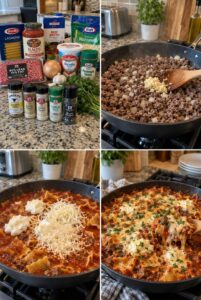
One-Pan Skillet Lasagna
This One-Pan Skillet Lasagna delivers all the comforting flavors of traditional lasagna without the complicated layering or pile of dirty dishes. Tender pasta cooks directly in a rich meat sauce, then everything is finished with creamy ricotta, melted mozzarella, and Parmesan cheese.
It’s an easy, family-friendly meal that’s perfect for busy weeknights, casual dinners, meal prep, or whenever you’re craving warm and cheesy Italian comfort food.
Prep Time: 15 minutes
Cook Time: 30–35 minutes
Total Time: Approximately 50 minutes
Servings: 6
Why You’ll Love This Recipe
- Made in one skillet
- No need to boil the noodles separately
- Classic lasagna flavor
- Rich and cheesy
- Ready in less than one hour
- Easy to customize
- Family-friendly
- Uses simple ingredients
- Less cleanup than traditional lasagna
- Delicious as leftovers
Ingredients
Meat Sauce
- 1 tablespoon olive oil
- 1 pound ground beef
- ½ pound mild Italian sausage, casings removed
- 1 small onion, finely diced
- 3 cloves garlic, minced
- 1 teaspoon Italian seasoning
- ½ teaspoon dried basil
- ½ teaspoon garlic powder
- ¼ teaspoon crushed red pepper flakes, optional
- ½ teaspoon salt
- ¼ teaspoon black pepper
- 1 jar (24 ounces) marinara sauce
- 1 can (14.5 ounces) diced tomatoes, undrained
- 2 cups beef broth or water
Pasta and Cheese
- 10–12 ounces uncooked lasagna noodles, broken into pieces
- 1 cup ricotta cheese
- 2 cups shredded mozzarella cheese, divided
- ½ cup grated Parmesan cheese, divided
- 2 tablespoons chopped fresh parsley or basil
How to Make One-Pan Skillet Lasagna
Step 1: Choose the Right Skillet
Use a large, deep skillet with a fitted lid.
A 12-inch skillet works well and provides enough room for the noodles to cook evenly.
If you plan to broil the cheese at the end, make sure the skillet is oven-safe.
Step 2: Heat the Oil
Place the skillet over medium-high heat.
Add the olive oil and allow it to warm for approximately 30 seconds.
Step 3: Brown the Meat
Add the ground beef and Italian sausage.
Break the meat into small pieces with a wooden spoon or spatula.
Cook for approximately 6–8 minutes, or until browned and completely cooked.
Step 4: Add the Onion
Add the diced onion to the skillet.
Continue cooking for approximately 3–4 minutes, or until the onion softens and becomes translucent.
Step 5: Add the Garlic
Stir in the minced garlic.
Cook for approximately 30 seconds, stirring constantly.
Avoid cooking the garlic for too long because it can burn and become bitter.
Step 6: Drain the Grease
Carefully remove excess grease from the skillet.
Leave a small amount behind for flavor, but removing most of it prevents the finished lasagna from becoming oily.
Step 7: Season the Meat
Add the Italian seasoning, dried basil, garlic powder, crushed red pepper flakes, salt, and black pepper.
Stir until the meat is evenly seasoned.
Step 8: Add the Sauce
Pour in the marinara sauce and undrained diced tomatoes.
Stir well, scraping any browned pieces from the bottom of the skillet.
Step 9: Add the Broth
Pour in the beef broth or water.
The extra liquid is necessary because the uncooked noodles will absorb it as they soften.
Bring the sauce to a gentle simmer.
Step 10: Add the Lasagna Noodles
Break the uncooked lasagna noodles into approximately 2-inch pieces.
Add them to the simmering sauce and gently press them beneath the liquid.
Try to separate overlapping pieces so they don’t stick together.
Step 11: Simmer
Reduce the heat to medium-low and cover the skillet.
Cook for approximately 18–22 minutes, stirring gently every 4–5 minutes.
The noodles should become tender, and the sauce should thicken.
If the skillet becomes dry before the pasta is tender, add additional broth or water ¼ cup at a time.
Step 12: Prepare the Ricotta
While the pasta cooks, combine the ricotta with ¼ cup Parmesan cheese and one tablespoon of chopped parsley.
You can also add a pinch of salt and black pepper.
Step 13: Check the Pasta
Taste one of the noodle pieces.
It should be tender but not mushy.
If the sauce appears too thin, uncover the skillet and simmer for several additional minutes.
Step 14: Add the Ricotta
Drop spoonfuls of the ricotta mixture evenly over the skillet.
Gently press some of the ricotta beneath the noodles while leaving several visible dollops on top.
Step 15: Add the Cheese
Sprinkle the mozzarella and remaining Parmesan cheese over the lasagna.
Cover the skillet and cook over low heat for approximately 3–5 minutes, or until the cheese melts.
Step 16: Broil for a Golden Top
For additional color, place the oven-safe skillet under the broiler for approximately 1–2 minutes.
Watch it constantly because the cheese can brown very quickly.
Skip this step if your skillet is not oven-safe.
Step 17: Rest
Remove the skillet from the heat.
Allow the lasagna to rest uncovered for approximately 5–10 minutes.
Resting gives the sauce time to thicken and makes the lasagna easier to serve.
Step 18: Garnish and Serve
Sprinkle the skillet lasagna with fresh parsley or basil.
Spoon it into bowls and serve warm with additional Parmesan cheese.
The Best Meat for Skillet Lasagna
A combination of ground beef and Italian sausage creates a rich, classic flavor.
You can also use:
- Ground beef
- Ground turkey
- Ground chicken
- Mild Italian sausage
- Spicy Italian sausage
- Ground pork
- Plant-based ground meat
If using lean meat, add a little extra olive oil before cooking the onion.
The Best Pasta to Use
Traditional dried lasagna noodles work well when broken into smaller pieces.
Other good options include:
- Mafaldine
- Campanelle
- Bow-tie pasta
- Rigatoni
- Penne
- Rotini
- Broken oven-ready lasagna noodles
Cooking times vary by pasta shape and brand, so begin checking for tenderness a few minutes early.
Can I Use Oven-Ready Lasagna Noodles?
Yes. Oven-ready noodles usually cook more quickly and may absorb less liquid.
Begin checking them after approximately 12–15 minutes.
Add broth gradually if the sauce becomes too thick.
How to Keep the Noodles from Sticking
Add the noodle pieces individually and press them beneath the sauce.
Stir gently every few minutes while the pasta cooks.
Avoid leaving several dry noodle pieces stacked together because they may stick and remain undercooked.
If necessary, add a small amount of broth to keep the noodles surrounded by liquid.
How to Fix Watery Skillet Lasagna
Remove the lid and simmer the lasagna for several minutes.
The excess liquid will evaporate and the sauce will become thicker.
Remember that the lasagna will continue thickening as it rests, so avoid reducing the sauce too aggressively.
How to Fix Dry Skillet Lasagna
If the sauce becomes too thick before the noodles are tender, add ¼ cup of warm broth or water.
Stir gently and continue cooking.
Different pasta brands absorb different amounts of liquid, so additional broth may occasionally be necessary.
Can I Make It Without Ricotta?
Yes. Replace the ricotta with:
- Small-curd cottage cheese
- Cream cheese
- Mascarpone
- Additional mozzarella
- A mixture of sour cream and Parmesan
Blend cottage cheese briefly if you prefer a smoother texture.
Vegetarian Skillet Lasagna
Omit the ground beef and sausage.
Sauté mushrooms, zucchini, bell peppers, and spinach with the onion.
Use vegetable broth instead of beef broth.
Cook watery vegetables before adding the sauce so the lasagna doesn’t become too thin.
Creamy Skillet Lasagna
Stir ½ cup heavy cream into the sauce during the final few minutes of cooking.
You can also add four ounces of softened cream cheese for an especially rich sauce.
Spicy Skillet Lasagna
Use hot Italian sausage and add extra crushed red pepper flakes.
Finish with Pepper Jack cheese or sliced jalapeños for additional heat.
Chicken Alfredo Skillet Lasagna
Replace the ground meat with cooked shredded chicken.
Use Alfredo sauce instead of marinara and add spinach, mozzarella, Parmesan, and ricotta.
Add enough chicken broth to cook the noodles without making the sauce watery.
Three-Cheese Skillet Lasagna
Use a combination of mozzarella, ricotta, and Parmesan.
For even more flavor, add provolone, Romano, fontina, or Asiago cheese.
Can I Add Vegetables?
Yes. Good additions include:
- Mushrooms
- Bell peppers
- Spinach
- Zucchini
- Carrots
- Eggplant
- Kale
- Broccoli
Cook mushrooms, zucchini, and other watery vegetables before adding the marinara sauce.
Add fresh spinach during the final five minutes so it wilts without overcooking.
What to Serve with Skillet Lasagna
Serve this lasagna with:
- Garlic bread
- Breadsticks
- Caesar salad
- Green salad
- Roasted broccoli
- Steamed green beans
- Garlic mushrooms
- Roasted zucchini
- Caprese salad
- Parmesan asparagus
A fresh salad or roasted vegetable balances the rich meat sauce and melted cheese.
Can I Prepare It Ahead?
You can prepare the meat sauce up to 2 days ahead.
Cool it completely and refrigerate it in an airtight container.
When ready to serve, return the sauce to the skillet, add the broth and noodles, and continue with the recipe.
For the best texture, cook the pasta shortly before serving.
Storage
Allow leftover skillet lasagna to cool completely.
Transfer it to an airtight container and refrigerate for up to 3–4 days.
The pasta will continue absorbing sauce during storage, so leftovers may become thicker.
How to Reheat Skillet Lasagna
Reheat individual portions in the microwave until hot.
For stovetop reheating, place the lasagna in a skillet over medium-low heat and add a splash of broth or marinara sauce.
Cover and heat gently, stirring occasionally.
You can also reheat it in a covered baking dish at 350°F.
Can You Freeze Skillet Lasagna?
Yes. Allow the lasagna to cool completely before transferring it to a freezer-safe container.
Freeze for up to 3 months.
Thaw overnight in the refrigerator and reheat with a small amount of marinara sauce or broth.
The pasta may be slightly softer after freezing, but the flavor will remain delicious.
Frequently Asked Questions
Do I need to boil the noodles first?
No. The uncooked noodles simmer directly in the meat sauce and broth.
Can I use only ground beef?
Yes. Replace the sausage with an equal amount of ground beef.
Can I use jarred marinara sauce?
Absolutely. Choose a thick, flavorful sauce you enjoy.
What skillet size should I use?
A deep 12-inch skillet with a lid works best.
Why are my noodles still hard?
They may not be completely submerged, or the skillet may need more liquid. Add a small amount of broth and continue cooking.
Can I use cottage cheese?
Yes. Cottage cheese is an excellent substitute for ricotta.
Can I make it gluten-free?
Yes. Use gluten-free lasagna noodles or another sturdy gluten-free pasta. Adjust the liquid and cooking time according to the package directions.
Can I make it without meat?
Yes. Replace the meat with mushrooms, zucchini, spinach, or plant-based ground meat.
Can I add more cheese?
Absolutely. Add more mozzarella or combine it with provolone, fontina, or cheddar.
How do I know when it’s ready?
The noodles should be tender, the sauce should be thick, and the cheese should be completely melted.
Pro Tips
Break the lasagna noodles into evenly sized pieces so they cook at the same rate.
Stir gently every few minutes to prevent the pasta from sticking without breaking it apart too much.
Keep additional warm broth nearby and add it gradually if the noodles absorb the sauce before becoming tender.
Let the finished lasagna rest for at least five minutes so the sauce thickens and the cheese settles.
Final Thoughts
This One-Pan Skillet Lasagna brings together tender pasta, rich meat sauce, creamy ricotta, mozzarella, and Parmesan in one easy meal.
It has all the comforting flavors of classic baked lasagna with less preparation and cleanup. Serve it for a busy weeknight, a relaxed family dinner, or anytime you want a warm, cheesy meal without assembling multiple layers.