
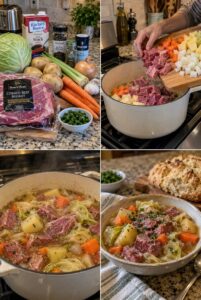
Comforting Irish-Style Corned Beef and Cabbage Stew
This Corned Beef and Cabbage Stew is a warm, satisfying meal filled with tender corned beef, potatoes, carrots, onions, and cabbage in a rich, savory broth. It transforms familiar corned beef dinner ingredients into a comforting one-pot stew that’s perfect for cold evenings, family dinners, or St. Patrick’s Day.
The recipe is also an excellent way to use leftover cooked corned beef. Serve it with Irish soda bread, biscuits, or thick slices of crusty bread for a complete meal.
Prep Time: 20 minutes
Cook Time: 1 hour 45 minutes
Total Time: Approximately 2 hours 5 minutes
Servings: 6–8
Why You’ll Love This Recipe
- Hearty and comforting
- Made in one pot
- Filled with tender vegetables
- Rich, savory broth
- Easy to customize
- Perfect for using leftover corned beef
- Suitable for stovetop or slow-cooker preparation
- Delicious for St. Patrick’s Day
- Freezer-friendly
- Makes a complete family meal
Ingredients
For the Stew
- 2 tablespoons butter or olive oil
- 1 large onion, diced
- 3 cloves garlic, minced
- 3 medium carrots, peeled and sliced
- 2 celery stalks, sliced
- 1½ pounds uncooked corned beef brisket, cut into bite-sized pieces
- 1 tablespoon flour, optional
- 6 cups low-sodium beef broth
- 1 tablespoon Worcestershire sauce
- 1 teaspoon Dijon mustard
- 1 bay leaf
- ½ teaspoon dried thyme
- ½ teaspoon black pepper
- ¼ teaspoon caraway seeds, optional
- 1½ pounds Yukon Gold or red potatoes, cut into chunks
- ½ small green cabbage, roughly chopped
- Salt, as needed
Optional Garnishes
- Chopped fresh parsley
- Sliced green onions
- Freshly ground black pepper
- Whole-grain mustard
- A small spoonful of sour cream
- Warm Irish soda bread
How to Make Corned Beef and Cabbage Stew
Step 1: Prepare the Corned Beef
Remove the corned beef from its package and rinse it briefly under cold water.
Pat it dry with paper towels and cut it into bite-sized pieces. Rinsing removes some of the surface brine and helps prevent the stew from becoming overly salty.
If the corned beef comes with a seasoning packet, reserve it. You can add part of the packet to the stew, depending on how strongly seasoned you want the broth.
Step 2: Cook the Onion
Heat the butter or olive oil in a large Dutch oven or heavy soup pot over medium heat.
Add the diced onion and cook for approximately 4–5 minutes, stirring occasionally, until it begins to soften.
Step 3: Add the Carrots and Celery
Add the sliced carrots and celery to the pot.
Continue cooking for another 4 minutes. The vegetables don’t need to become completely tender because they will continue cooking in the broth.
Step 4: Add the Garlic
Stir in the minced garlic.
Cook for approximately 30 seconds, stirring constantly, until fragrant. Avoid letting the garlic brown because it can become bitter.
Step 5: Brown the Corned Beef
Add the pieces of corned beef to the pot.
Cook for approximately 5 minutes, turning the pieces occasionally. The meat doesn’t need to cook through at this stage, but light browning will add more flavor to the broth.
Step 6: Add the Flour
Sprinkle the flour over the meat and vegetables if you prefer a slightly thicker stew.
Stir for approximately one minute so the flour coats the ingredients and loses its raw flavor.
You can omit the flour for a thinner, soup-like broth or if you need the recipe to be gluten-free.
Step 7: Add the Broth and Seasonings
Slowly pour in the beef broth while stirring.
Add the Worcestershire sauce, Dijon mustard, bay leaf, thyme, black pepper, and caraway seeds, if using.
If you’re using the seasoning packet from the corned beef, add approximately half of it initially. You can add more later after tasting the broth.
Step 8: Simmer the Corned Beef
Bring the stew to a gentle boil.
Reduce the heat to low, cover the pot, and simmer for approximately 60–75 minutes, or until the corned beef begins to become tender.
Stir occasionally and keep the stew at a gentle simmer rather than a rapid boil.
Step 9: Add the Potatoes
Add the potato chunks to the pot.
Cover and continue simmering for approximately 20 minutes, or until the potatoes are almost fork-tender.
Cut the potatoes into similar-sized pieces so they cook evenly.
Step 10: Add the Cabbage
Stir the chopped cabbage into the stew.
It may appear that there is too much cabbage at first, but it will quickly wilt as it cooks.
Cover and simmer for another 10–15 minutes, or until the cabbage and potatoes are tender.
Step 11: Adjust the Consistency
If the stew is too thick, add a small amount of additional beef broth or water.
For a thicker consistency, remove approximately one cup of potatoes and broth. Mash the potatoes with a fork, then stir them back into the pot.
Step 12: Taste Before Adding Salt
Remove the bay leaf and taste the broth.
Corned beef and packaged broth can contain a considerable amount of sodium, so add extra salt only if necessary.
Adjust the black pepper, mustard, thyme, or Worcestershire sauce to suit your taste.
Step 13: Serve
Ladle the hot stew into bowls.
Garnish with fresh parsley, green onions, or additional black pepper. Serve with mustard and warm bread on the side.
Can I Use Cooked Corned Beef?
Yes. This recipe is an excellent way to use leftover cooked corned beef.
Prepare the vegetables and broth as directed, but don’t add the cooked meat at the beginning. Simmer the carrots and celery in the broth, add the potatoes, and then add the cabbage.
Stir in approximately 3–4 cups of chopped cooked corned beef during the final 10 minutes. This allows it to heat through without becoming dry or stringy.
The Best Potatoes for the Stew
Yukon Gold potatoes are an excellent choice because they have a creamy texture and hold their shape well.
Red potatoes also work well and don’t need to be peeled. Russet potatoes create a thicker broth because they release more starch, but they may break apart during cooking.
Other suitable options include:
- Baby potatoes
- Fingerling potatoes
- White potatoes
- A mixture of potatoes and parsnips
Cut large potatoes into approximately 1½-inch pieces to prevent them from cooking too quickly.
The Best Cabbage to Use
Green cabbage is the traditional and most reliable choice for this stew. It becomes tender while maintaining enough texture to avoid disappearing into the broth.
Savoy cabbage has softer leaves and a slightly sweeter flavor. Add it later because it cooks more quickly.
Napa cabbage can also be used, but it only needs a few minutes of cooking.
How to Keep the Stew from Becoming Too Salty
Corned beef is cured in a salty brine, so it’s important to control the amount of additional sodium.
To prevent an overly salty stew:
- Rinse the corned beef before cooking
- Use low-sodium or unsalted beef broth
- Add only part of the seasoning packet
- Don’t add salt until the stew is finished
- Add extra potatoes if the broth tastes too strong
- Dilute the stew with water or unsalted broth when necessary
If your corned beef is especially salty, soak it in cold water for approximately 30 minutes, then drain and pat it dry before cooking.
How to Thicken Corned Beef Stew
The stew will naturally thicken slightly as the potatoes cook.
For a thicker result, you can:
- Mash some of the cooked potatoes
- Add flour before pouring in the broth
- Simmer uncovered during the final 10 minutes
- Add a cornstarch slurry
- Stir in instant mashed potato flakes
To prepare a cornstarch slurry, mix two tablespoons of cornstarch with three tablespoons of cold water. Stir it into the simmering stew and cook for several minutes until thickened.
Slow-Cooker Corned Beef and Cabbage Stew
Place the onions, garlic, carrots, celery, potatoes, and corned beef in a 6-quart slow cooker.
Add the broth, Worcestershire sauce, Dijon mustard, bay leaf, thyme, black pepper, and optional caraway seeds.
Cover and cook on low for 7–8 hours or high for 4–5 hours, until the beef and potatoes are tender.
Add the cabbage during the final 45–60 minutes so it becomes tender without turning mushy.
Remove the bay leaf, taste the broth, and adjust the seasonings before serving.
Creamy Corned Beef and Cabbage Stew
For a creamy version, stir in one cup of heavy cream or half-and-half after the vegetables are tender.
Reduce the heat to low and warm the stew gently. Avoid boiling it after adding the dairy because the cream may separate.
You can also add four ounces of softened cream cheese for a thicker and richer broth.
Corned Beef and Cabbage Stew with Beer
Replace one cup of beef broth with a dark Irish stout.
The beer adds malty flavor and a gentle bitterness that complements the salty corned beef and sweet vegetables.
Allow the beer to simmer for several minutes before covering the pot so some of the sharper alcohol flavor can cook away.
Corned Beef and Cabbage Stew with Barley
Add ½ cup of rinsed pearl barley with the broth.
Barley gives the stew a hearty texture and absorbs plenty of flavor. You may need to add one or two additional cups of broth as it cooks.
Simmer until both the barley and corned beef are tender before adding the cabbage.
Can I Add Other Vegetables?
Yes. This recipe is easy to customize with additional vegetables.
Good choices include:
- Parsnips
- Turnips
- Leeks
- Rutabaga
- Green beans
- Peas
- Mushrooms
- Corn
Add firm root vegetables with the carrots. Add quick-cooking vegetables such as peas or green beans during the final few minutes.
What to Serve with Corned Beef and Cabbage Stew
This stew is hearty enough to serve as a complete meal, but it also pairs well with:
- Irish soda bread
- Crusty sourdough bread
- Buttermilk biscuits
- Dinner rolls
- Rye bread
- Simple green salad
- Roasted Brussels sprouts
- Pickled vegetables
- Whole-grain mustard
- Horseradish cream
Bread is especially useful for soaking up the savory broth.
Can I Prepare It Ahead?
Yes. The flavors become even more developed after the stew rests overnight.
Prepare the recipe as directed and allow it to cool. Transfer it to an airtight container and refrigerate.
Reheat the stew gently the following day. Add a splash of broth if it has thickened too much during storage.
For the best cabbage texture, you can prepare the stew base in advance and add freshly chopped cabbage while reheating.
Storage
Allow the stew to cool before transferring it to airtight containers.
Refrigerate for up to 3–4 days.
Don’t leave the finished stew at room temperature for more than two hours. Store any bread, mustard, or fresh garnishes separately.
How to Reheat Corned Beef and Cabbage Stew
Reheat the stew in a covered saucepan over medium-low heat, stirring occasionally.
Add a small amount of broth or water if needed.
Individual portions can be reheated in the microwave in one-minute intervals. Stir between intervals so the meat and vegetables heat evenly.
Can You Freeze Corned Beef and Cabbage Stew?
Yes, although the texture of the potatoes and cabbage may soften slightly after thawing.
Cool the stew completely and transfer it to freezer-safe containers, leaving space for expansion. Freeze for up to 3 months.
Thaw overnight in the refrigerator and reheat gently on the stovetop.
For the best freezer results, prepare the stew without cabbage and add fresh cabbage when reheating.
Frequently Asked Questions
What is corned beef?
Corned beef is beef brisket that has been cured in a seasoned salt brine. Despite its name, it doesn’t contain corn. The word “corned” refers to the large grains of salt traditionally used during curing.
Should I rinse corned beef before cooking?
Yes. A brief rinse removes excess surface brine and helps control the saltiness of the finished stew.
Do I use the corned beef seasoning packet?
You can use it, but begin with only part of the packet. The blend may include peppercorns, mustard seeds, coriander, bay leaves, and other strong spices.
Can I use leftover corned beef?
Yes. Add cooked corned beef during the final 10 minutes so it heats without becoming overcooked.
When should I add the cabbage?
Add the cabbage during the final 10–15 minutes of stovetop cooking or the last 45–60 minutes of slow cooking.
Can I make the stew without potatoes?
Yes. Replace the potatoes with turnips, rutabaga, cauliflower, or additional carrots.
Can I make it gluten-free?
Yes. Omit the flour and confirm that the broth, Worcestershire sauce, mustard, and corned beef are certified gluten-free.
Why is my corned beef tough?
The meat may need additional cooking time. Corned beef becomes tender when cooked slowly at a gentle temperature.
Why did my cabbage become mushy?
The cabbage was probably added too early. Add it near the end and cook only until tender.
Can I use chicken broth?
Yes. Chicken broth creates a lighter flavor, while beef broth produces a richer stew.
Can I cook everything at the same time?
You can, but the potatoes and cabbage may become too soft before the corned beef is tender. Adding the vegetables in stages gives you better control over their texture.
Is this recipe suitable for St. Patrick’s Day?
Yes. Corned beef, cabbage, carrots, and potatoes make it a fitting and comforting St. Patrick’s Day meal.
Pro Tips
Rinse the corned beef and use low-sodium broth to prevent the stew from becoming too salty.
Cut the meat and potatoes into evenly sized pieces. Keep the liquid at a gentle simmer so the corned beef becomes tender without turning dry.
Add the cabbage near the end of cooking and wait until the stew is finished before adding salt. Serve it with mustard and thick slices of warm bread for a simple, satisfying meal.
Final Thoughts
This Corned Beef and Cabbage Stew turns a classic combination into a rich, comforting one-pot dinner. Tender corned beef, creamy potatoes, carrots, celery, and cabbage simmer together in a deeply savory broth.
It’s perfect for St. Patrick’s Day, cold-weather dinners, or using leftover corned beef. Prepare it on the stovetop or in the slow cooker, and serve it with Irish soda bread for a warm and filling family meal.